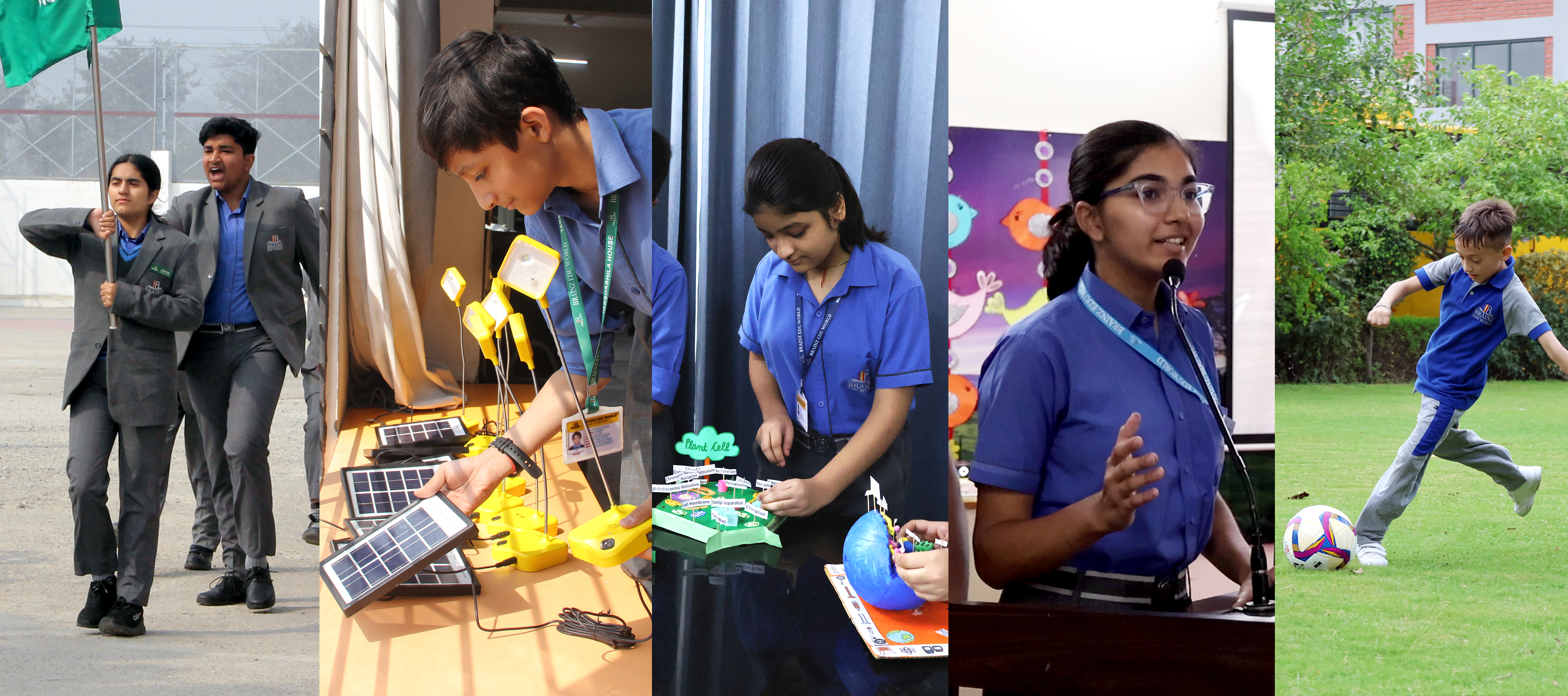


At Brainz, we don’t teach design thinking as a named framework. We build the conditions in which it happens naturally.
We start with observation, not instruction.
Before we tell students anything, we ask them to look at something real. Two lunchboxes on a classroom carpet. The plants growing on the campus. The faces of the people who work in the school. Learning begins with noticing and with the questions that noticing produces. Those questions, not our lesson plans, shape what happens next.
We design experiences, not activities.
An activity is something a student does and puts down. An experience changes how they see. We design for experiences: situations with real stakes, real audiences, and real consequences. A Grade II student who teaches their parents about animal adaptations at an end-of-term exhibition is not doing an activity. They are doing something they will remember.
We prototype, iterate, and learn from what doesn’t work.
When a student team’s first idea fails, we don’t ask them to start again. We ask them to look at why it failed and redesign. When a teacher’s approach doesn’t produce the results they hoped for, we don’t call it a failure. We call it data. This culture of honest iteration runs through everything.
We share work with real audiences.
Student work at Brainz is not only submitted to a teacher and filed away. It is presented to parents, to younger peers, to community members, to district officials. The discipline of preparing work for a real audience and the confidence that comes from presenting it are outcomes in themselves.
Every day at Brainz comprises of new learning adventures and fun filled activities.